

In my travels through Andalucía, I was fortunate to visit the town of Córdoba (KOR-do-bah). A pleasant one-and-a-half hour train journey from Seville, Córodoba is home to the Mezquita (meth-KEE-tah). Since I was a teenager I wished to visit the Mezquita and view its endless red and white arches. Little did I know the Mezquita, and its surrounding town, would surprise me in more ways than one.
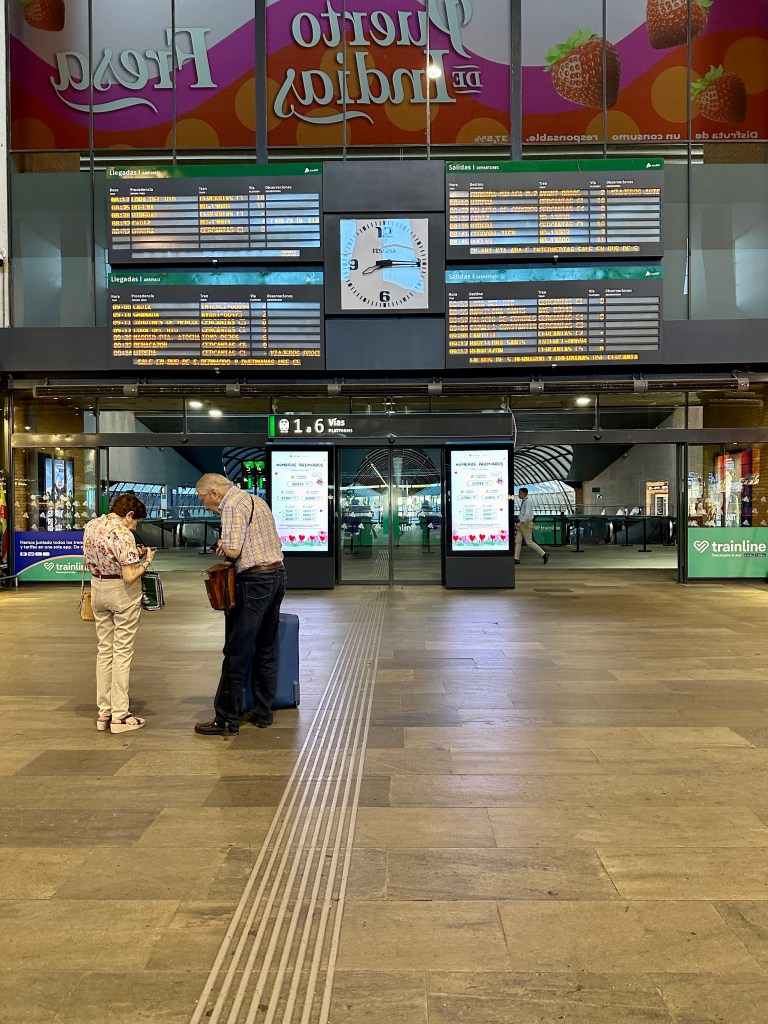
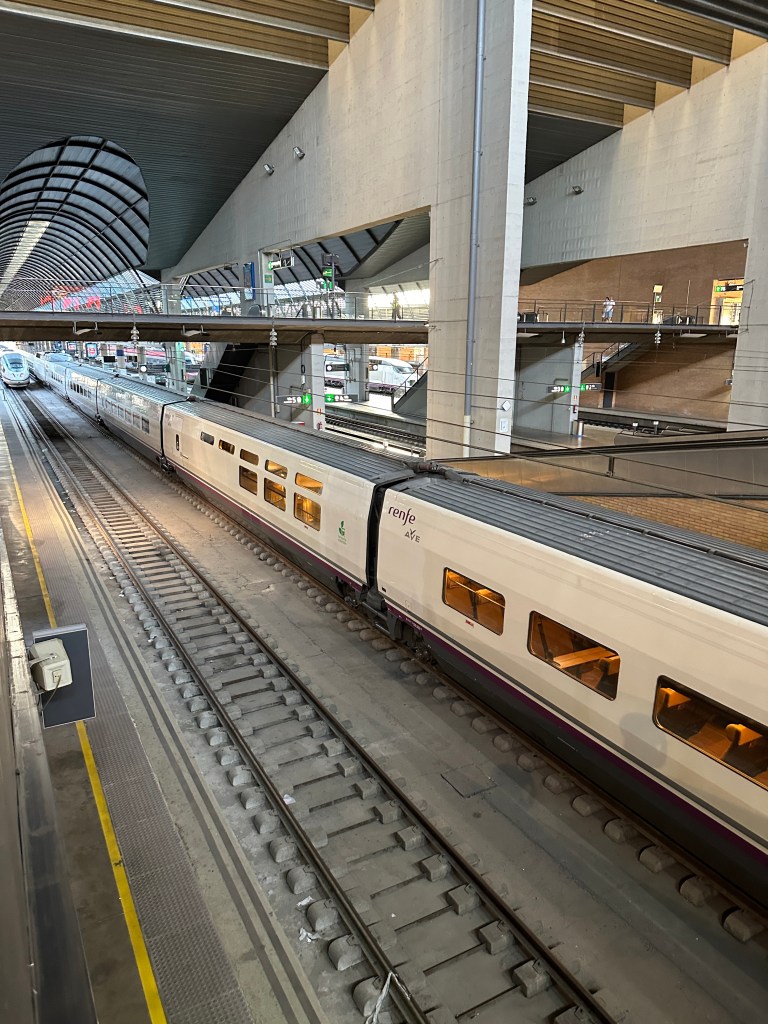
My journey to Córdoba began that morning with a pressing need to understand the railway system: more than one train line exists in Spain, but, thankfully, the principles of finding a track remain the same the world over.
When I arrived in Córdoba, I joined my tour group. My first surprise of the day came when I learned the city was home to four civilizations: the Romans, the Visigoths, the Muslims, and the Christians. To stand in a city dating to the second century (approximately 152 years before the birth of Jesus) was both humbling and striking. How many people had walked the same road I now stood upon? How many gave thought that their lives would one day be stories for thousands of tourists hundreds of years later?
We soon moved towards the main attraction of the day: the Mezquita. Built in 784 AD by the Umayyad dynasty, the mosque (and now cathedral) is the second most visited Islamic site after the Alhambra, which I wrote about in my post here. Declaring itself the capital of the world when the rest of Europe languished in the dark ages, Córdoba under Umayyad rule flourished academically, politically and economically. Naturally, its mosque had to reflect that.
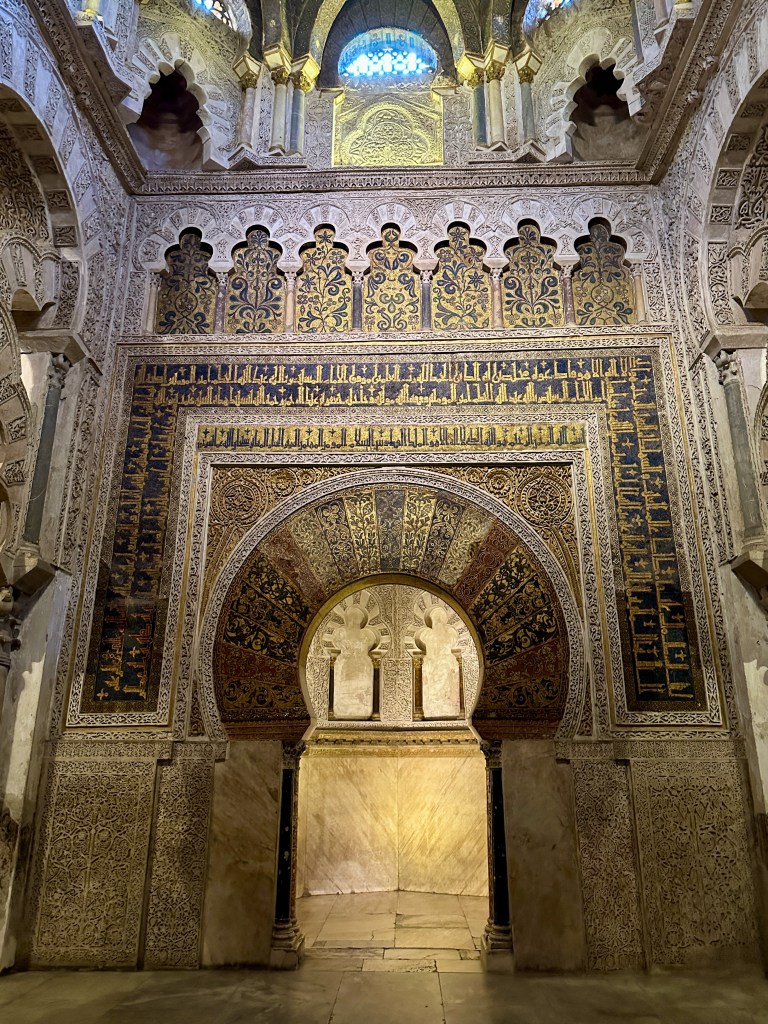
Upon entering the former mosque, I encountered the second surprise of the day. Not only were we greeted by the famous limestone and brick arches but also by darkness.
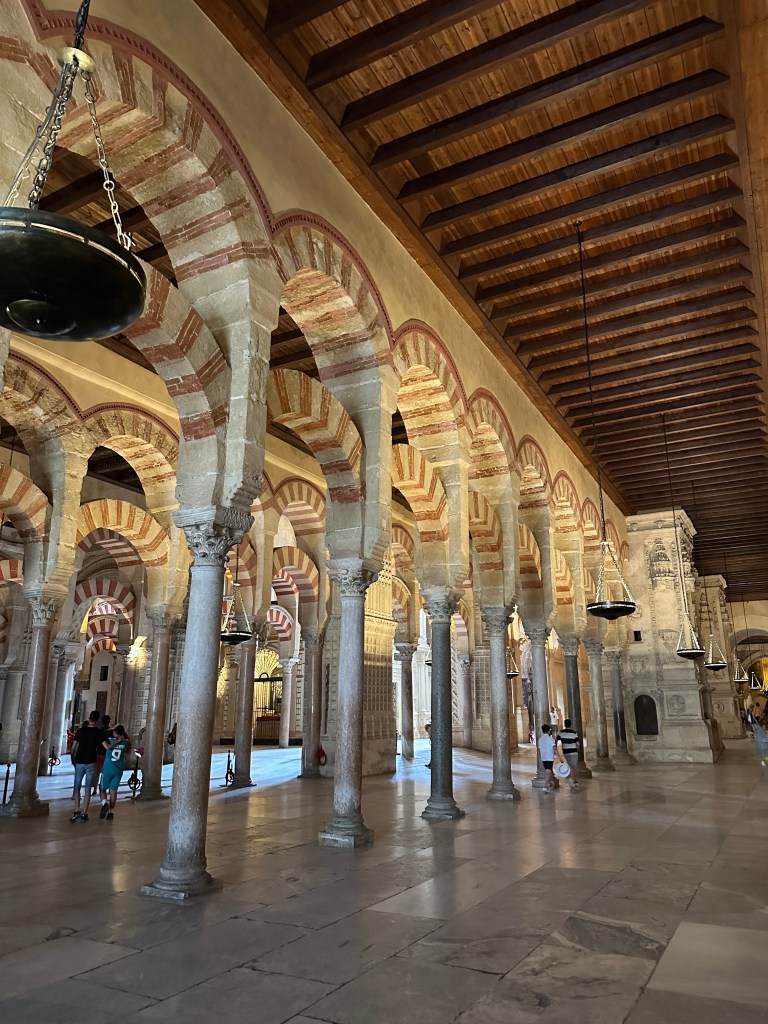
The reason for the darkness was simple described our tour guide. After 400 years of rule, the Umayyad dynasty fell to Catholic rulers. King Ferdinand III conquered Córdoba in 1236 and promptly converted it to a church. To promote the majesty of the church, the halls of the mosque were intentionally darkened by magnificent wooden doors and coverings over skylights. Years later, in 1523, a chapel, stretching 130 feet high over the mosque’s 30 feet, was built – not over the mosque as had been done by conquerors before – but directly inside of it.
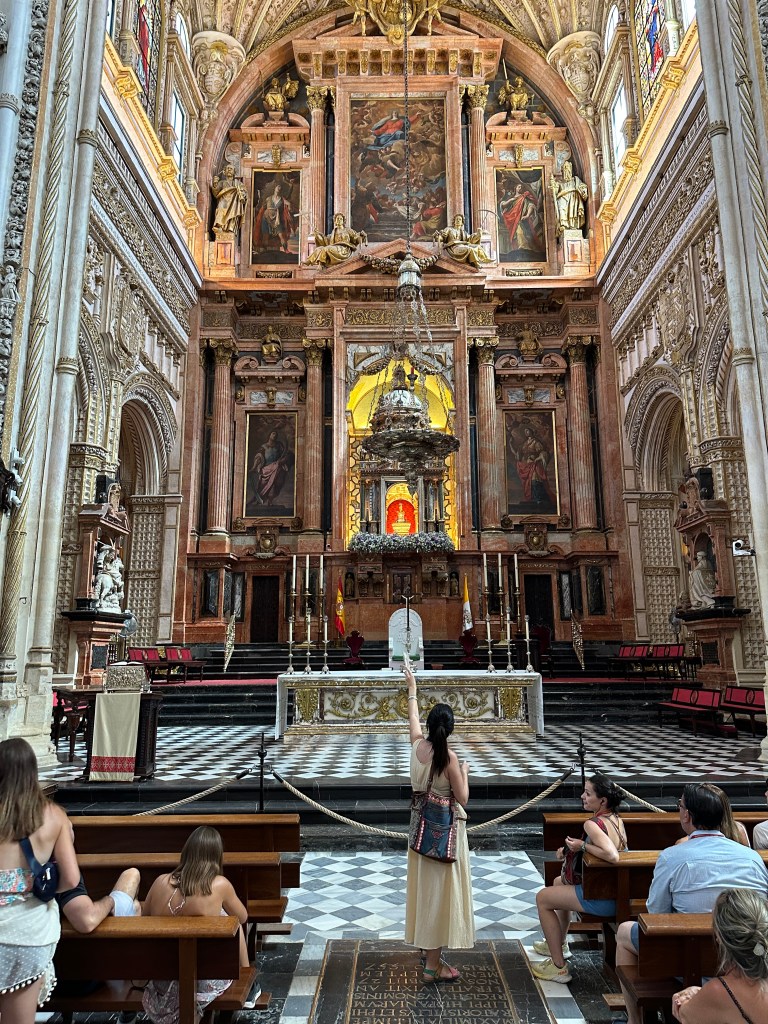
In his book on Andalucía, Rick Steves describes the juxtaposition of mosque and church when he writes, “As you take in the styles of these two great places of worship, ponder how they reflect the differences between Catholic and Islamic aesthetics and psychology: horizontal versus vertical, intimate versus powerful, fear-inspiring versus loving, dark versus bright, simple versus elaborate, feeling close to God versus feeling small before God.”
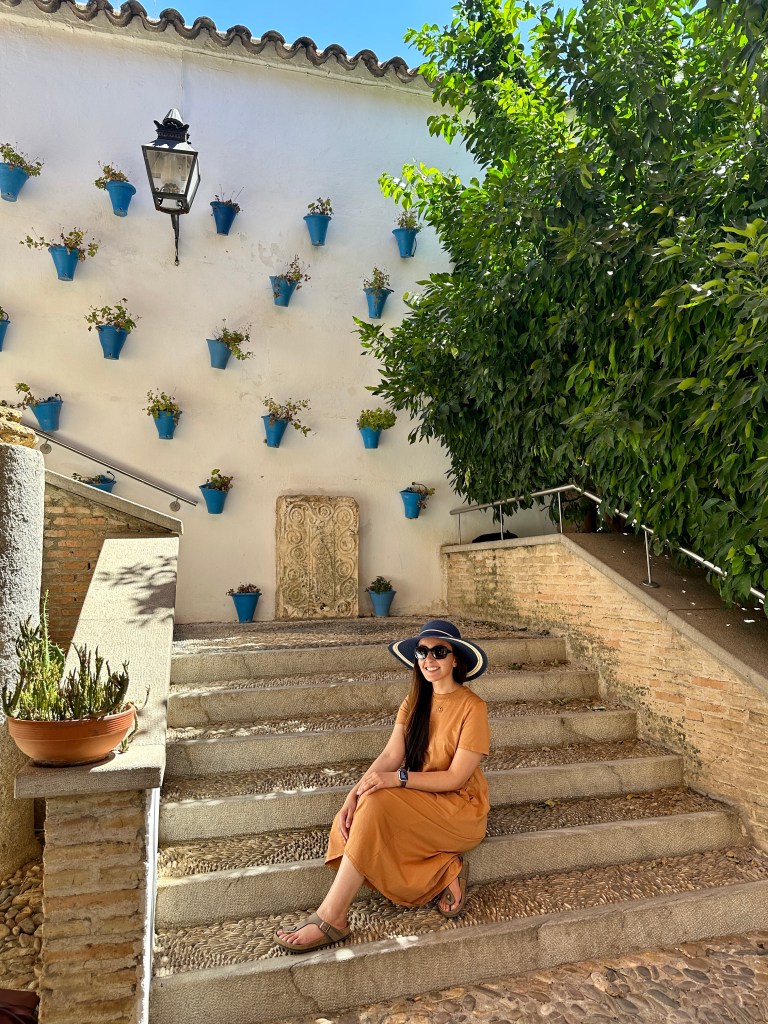
In addition to the Mezquita, we also visited the Jewish Quarter, whose origins date to the Middle Ages. Winding roads, white-washed walls and colorful flowers greeted us as we walked towards the Synagogue.
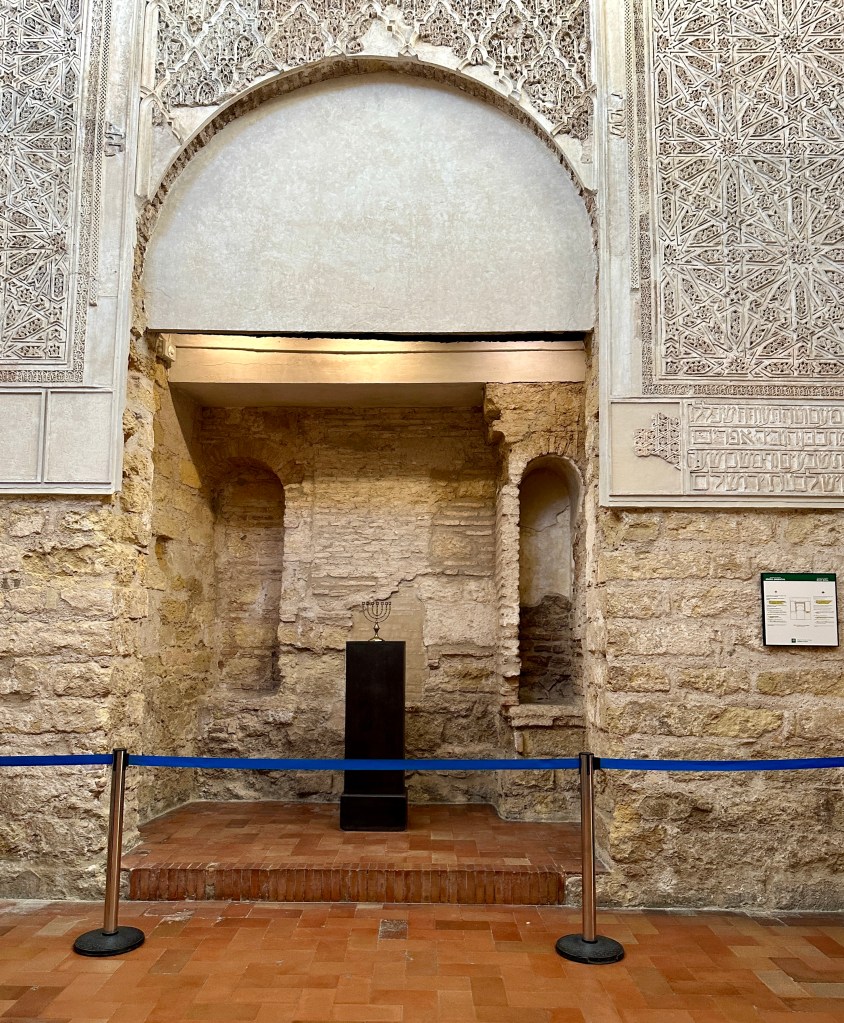
Built in the 1300s, the Synagogue delivered the third surprise of the day: it looked just like a room from the Alhambra. Our tour guide pointed out the design was similar to arabesque plaster; however, the mudejar design differed in several ways, including in its incorporation of animals. (Iconic designs of humans of animals would not have traditionally been included in Islamic architecture).
Finally, Córdoba provided me with one last surprise: in addition to Granada, Córdoba was also one of the the sites Columbus met with the King and Queen of Spain in his campaign to seek permission for travel.
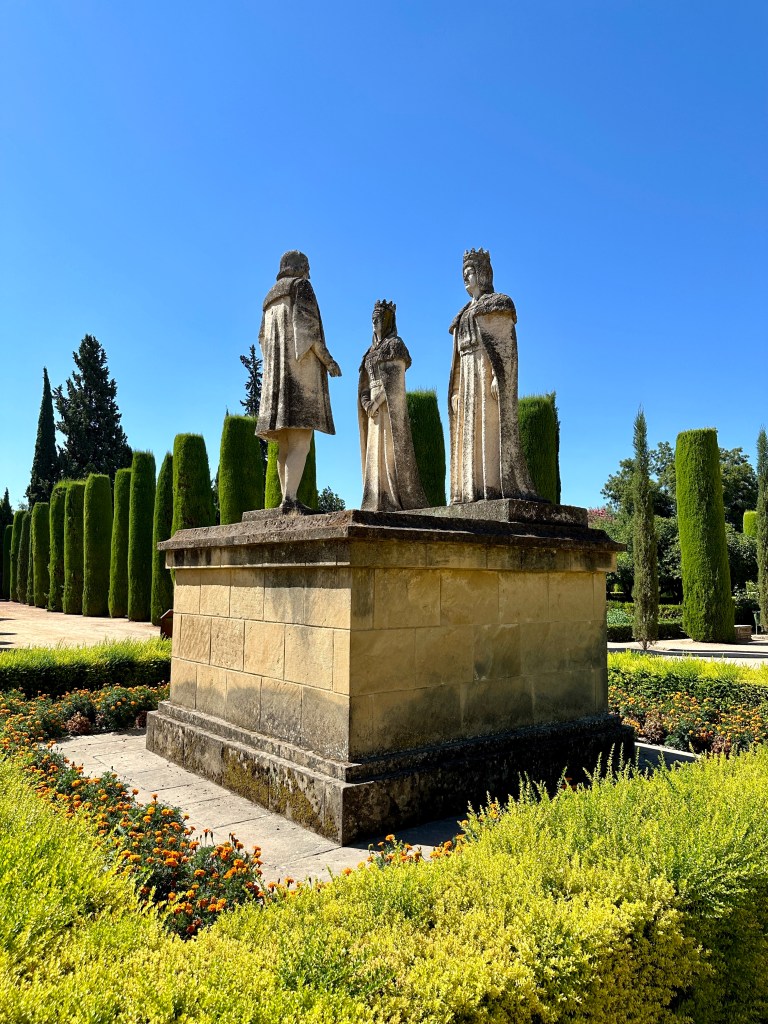
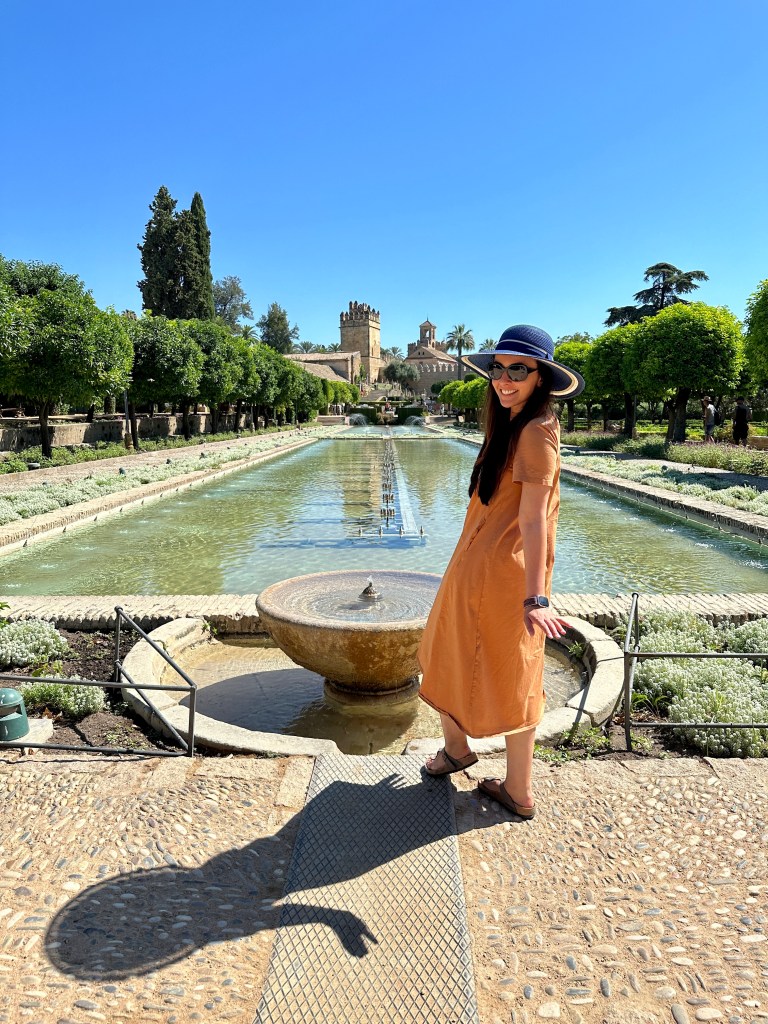
The best part of the Alcazar was the gardens of course. And what happens when you put me next to a garden?
If you’ve made it this far, thank you for reading my post. Thank you also to everyone who has taken the time to send words of encouragement, publicly or privately.
That I have any readership for this humble blog may be the best surprise of all.
To keep up with my adventures, read more here.

 Casual Musings
Leave a comment